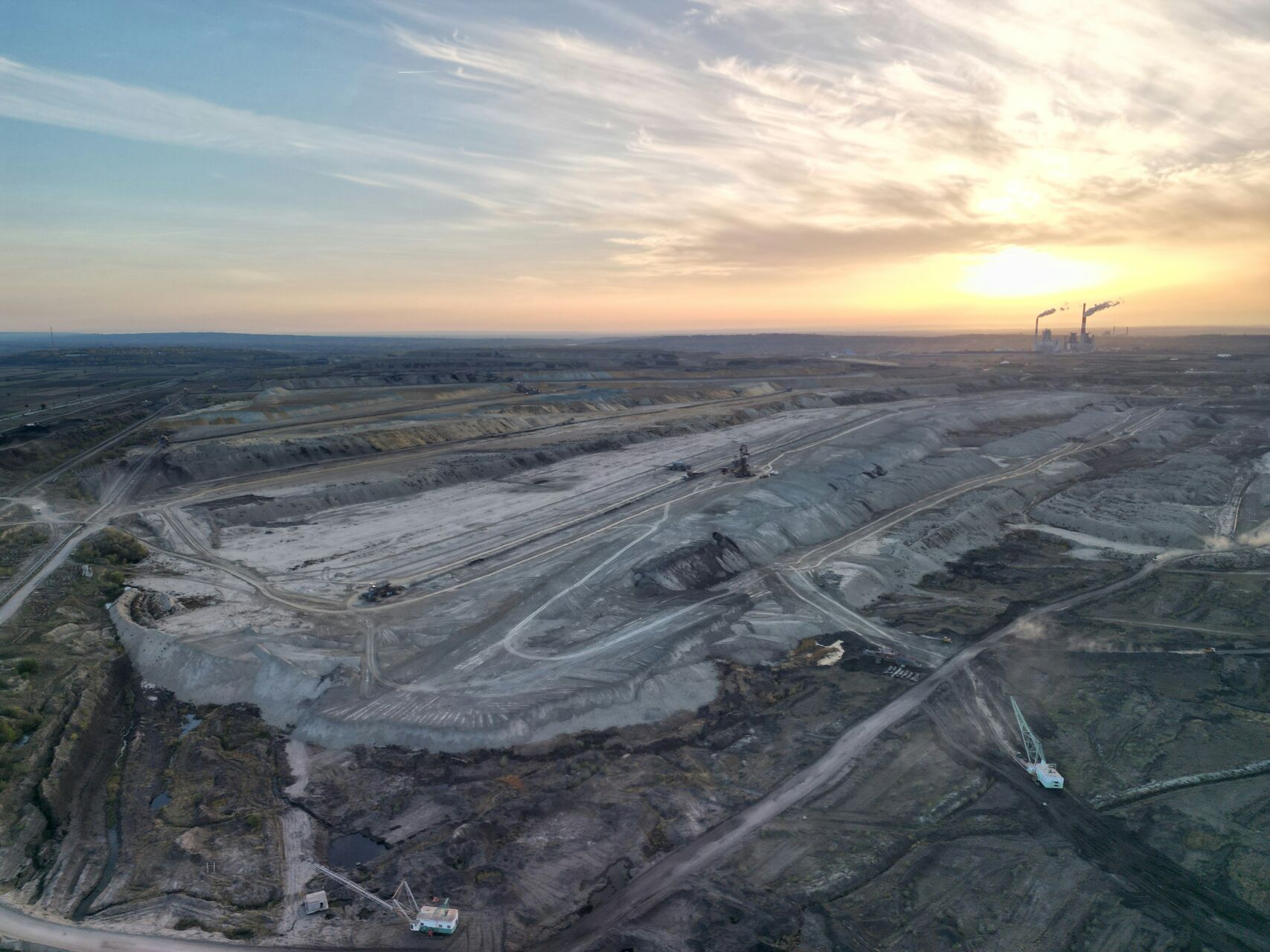
Coal defines life in the town of Kostolac – it feeds families, defines local identity and provides economic security through jobs in the state-owned energy company EPS, which dominates the region. Almost a fifth of all electricity in Serbia is produced here, firmly linking the town’s future to coal mining and thermal power generation. But this dependence comes with significant environmental and social costs. Massive air, water and soil pollution affect everyday life, and coal ash from large landfills spreads throughout the area, covering homes, nature and public spaces, posing serious health risks. Kostolac’s power plants are among the largest producers of sulphur dioxide in the region, despite recent and long-delayed measures to reduce emissions. The constant mining and disposal of ash destabilises the soil, leading to cracks in residential buildings and damage to culturally significant structures, including local churches. Nearby villages, such as Drmno, are facing disruption of groundwater systems, forcing residents to rely on bottled water.
Kostolac also highlights the contradictions of Serbia’s energy transition. Renewable energy projects, including wind and solar power plants built on former mining sites, are being accompanied by the opening of a new coal-fired power plant, promoted as a necessity for energy security. While renewables symbolize a shift to cleaner energy, their capacity is still insufficient to replace coal in the national energy mix. Despite the environmental damage and persistent uncertainty, job insecurity is not the main concern for residents. Continued investment in coal infrastructure, plans to expand mining activities, and repeated postponements of transition timelines reinforce the assumption that coal will remain key to the region for decades to come. While this provides a sense of short-term security, stagnant wages, weak public engagement in the process, and the absence of clear and transparent retraining options mean that the goal of a truly just transition will remain unfulfilled.
The article by Anja Anđušić was originally published with the support of the project Enhancing the Capacities of Serbian Independent Media in Informing about the Green Transition Challenges in the printed version of the magazine Liceulice.