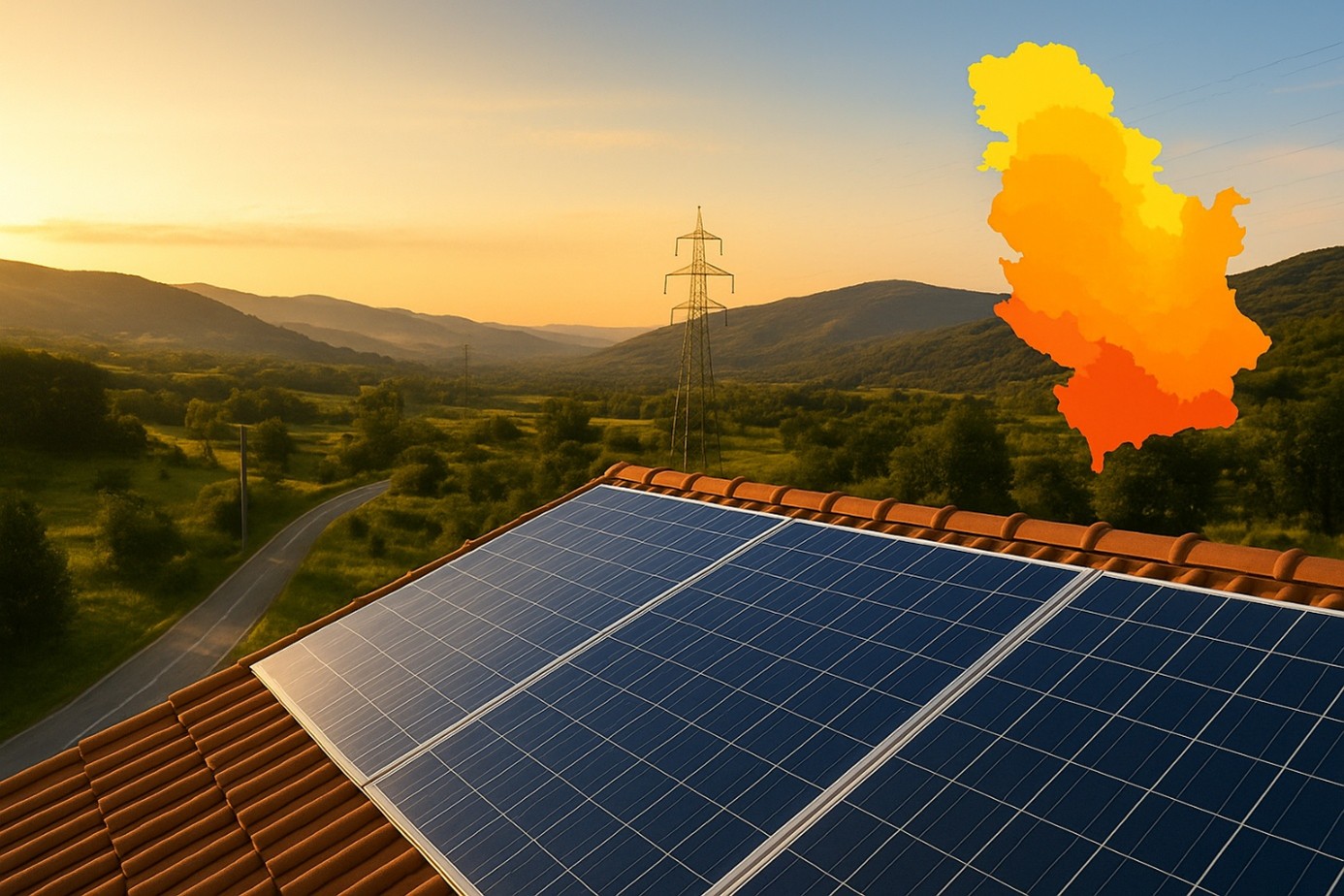
In southern Serbia, solar energy could become a key source for the energy transformation. Experts point out that the region has great natural potential, but its use depends on accurate mapping of solar radiation, a legislative framework and citizen involvement. Determining solar potential is a complex process that, in addition to the number of sunny days, takes into account temperature, slope and orientation of the terrain, shadows, availability of infrastructure and nature protection. Modeling requires a combination of meteorological data, digital terrain models and specialized software - the result is solar maps showing the real potential of locations. However, mapping itself is only the first step. This is followed by an analysis of suitable locations, economic and environmental screening, inclusion in spatial plans, obtaining permits and financing, and only then the construction, operation and later ecological closure of power plants. Citizens, such as the so-called prosumers - households, housing cooperatives or companies that produce electricity for their own use, i.e. customers and suppliers at the same time. However, their participation is not yet systematically supported, despite the great potential, for example in more than 50,000 housing cooperatives in Serbia. Without strengthening rights, financial opportunities and citizen involvement, there is a risk that the energy transition will remain in the hands of large investors – and the sun will continue to benefit only a privileged group.
The article by Vladislav Stojičić was originally published with the support of the project Enhancing the Capacities of Serbian Independent Media in Informing about the Green Transition Challenges by Rešetka.