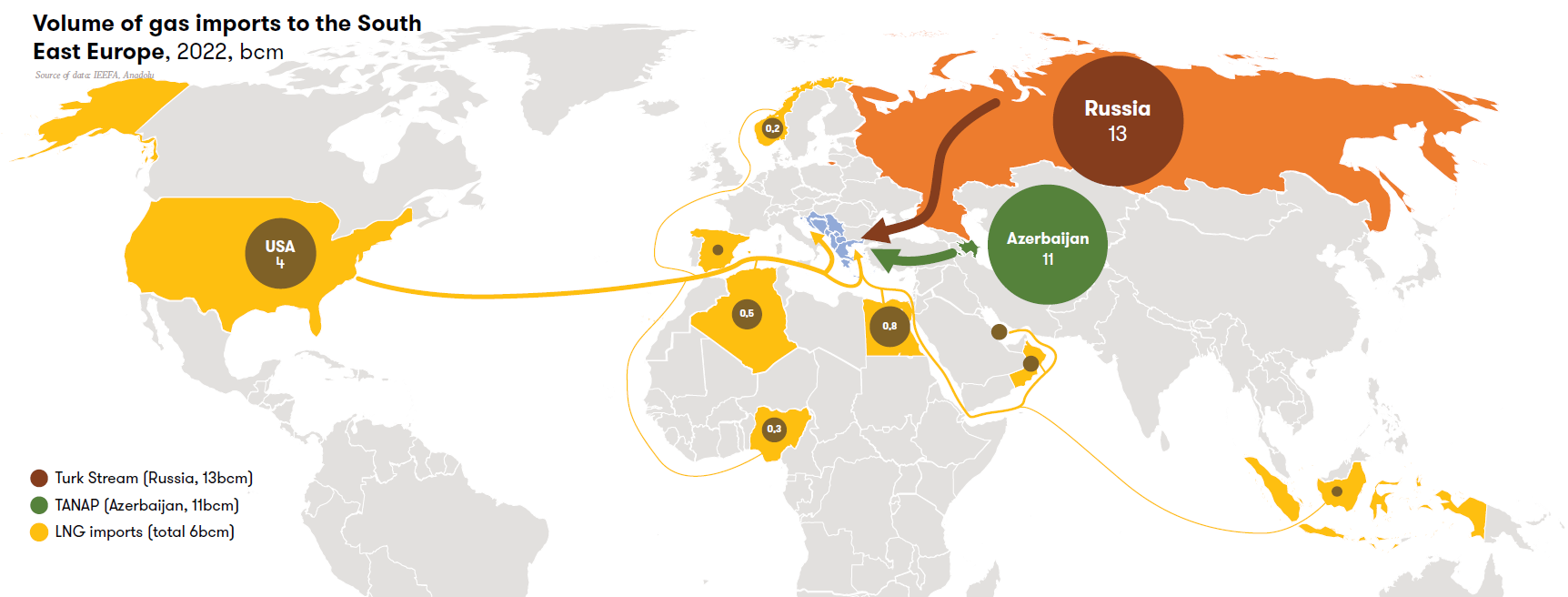
Proponents of these plans suggest that gas will provide the region with a quick and affordable replacement for coal. Its combustion in outdated power plants is the backbone of the Western Balkan energy generation, but it also is a major source of the region's extreme levels of environmental pollution. The new sources of gas should also reduce the Western Balkans' energy dependence on Russia, which was until recently the exclusive supplier of gas to the region. Despite the limited supply, Russia has been able to use this dependence to promote its own interests in a geopolitically exposed region.
However, the plans for increasing the role of gas in the Western Balkans also face new geopolitical and economic risks associated with the planned supplies as well as the problematic role of gas in the process of decarbonisation. Although gas combustion is more efficient and environmentally friendly than burning coal, gas is still a fossil fuel with a high carbon footprint. Thus, unlike investment in renewables, a costly energy transition to gas does not offer a way out of unsustainable carbon lock-in.
The factsheet focusing on the role of natural gas in the energy sector of the Western Balkans seeks answers to the question of whether increasing supplies of gas to the Western Balkans is indeed a geopolitical and climate opportunity or rather a trap from which the region will find it difficult to get back on a path of sustainable energy in upcoming decades.
The factsheet was produced with support from the Balkan Investigative Reporting Network.