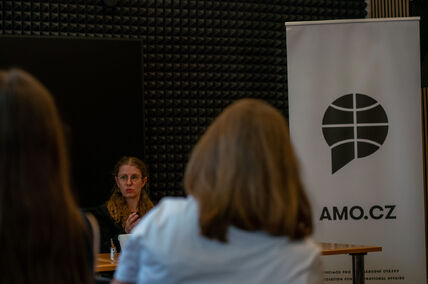
After an icebreaking session, we kicked off the seminar with a lecture on the introduction to feminist foreign policy (FFP) led by AMO Research Fellow and Charles University PhD student Alice Nováková. She introduced us to some core values of feminist foreign and security policy such as a human (rather than state) centered approach and emphasis on values such as rights and representation. Moreover, she provided an overview of the feminist critique of traditional foreign policy such as that foreign policy is often exclusionary and ignores voices of marginalized groups. Moreover, she explained that the way traditional foreign policy deals with conflicts promotes traditional gender roles (such as that men are heroes and women are victims). She then proceeded to explain how feminist foreign policy works in practice and is implemented by the countries that follow it. She concluded the session with an explanation of the mechanisms behind the recently growing anti-gender movement and backlash against FFP.
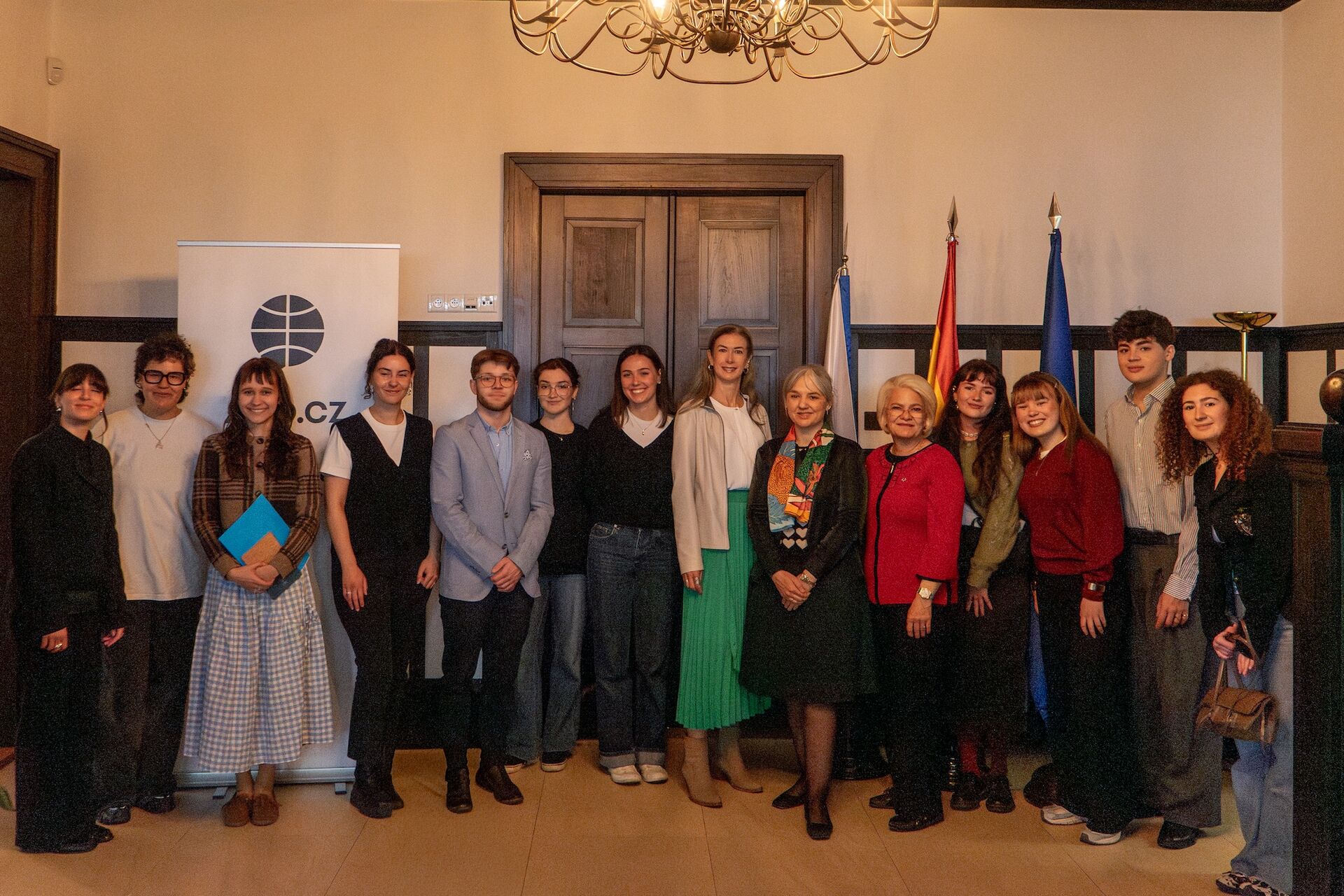
We began the second day with a discussion with Canadian Ambassador Emily McLaughlin, Spanish Ambassador Maria Perez Sanchez-Laulhe and Mexican Ambassador Ana Berenice Díaz Ceballos Parada. We discussed their countries’ experiences with feminist informed foreign policies. The Canadian Ambassador emphasized tackling backlash by funding feminist organizations and creating early warning networks. Moreover, she stressed the importance of intersectional feminism (e.g. when it comes to the support of indigenous people or people with disability). The Spanish Ambassador highlighted the importance of civil society engagement in the implementation of FFP and the need to balance sensitivity to local contexts and standing by feminist principles and human rights. The Mexican Ambassador emphasized the commitment to promote feminism in multilateralism (manifested e.g. by supporting a woman candidate for the UN General Secretary) as well as consideration of feminist principles in dealing with new challenges (such as AI governance).
The morning continued with another discussion – this time with Irena Ferčíková Konečná, a member of the Chamber of Deputies of the Czech Parliament. We discussed the rise of the far-right and feminist strategies to fight against it. Moreover, we talked about some concrete policies and a feminist outlook on them: We discussed how the criminalization of migration leads to the rise of human trafficking as well as how the criminalization of sex work causes an increase in their vulnerability. Moreover, Irena Ferčíková Konečná shared with us her own journey to politics.
After lunch, we had a lecture with a senior researcher at the Institute of International Relations Ondřej Horký-Hlucháň on the role of the Global South in promoting FFP. He explained African feminists’ critique of FFP which consists of the assertion that FFP does not sufficiently reject global power hierarchies. Moreover, he stressed the importance of employing an intersectional outlook when implementing development projects. He also explained the difference between postcolonialism and decolonialism.
The last session of the second day was a discussion with Tereza Štěpková, the director of Antikomplex. She introduced us to a gender perspective on modern history. We discussed the reasons why women’s stories are underrepresented in history books as well as public discussion: firstly, due to a lack of historical materials, and secondly because history research is still a highly masculinized field in which both feminist perspectives and women historians are underrepresented. Tereza Štěpková then also introduced us to stories of selected women that participated in the anti-Nazi resistance during WW2.
The last day of the seminar was all about putting the facts and theories gained during the first two days into practice. We started the day with a policy lab in which participants developed feminist reforms of existing policies. Participants were divided into groups and focused on the German Asylum Policy, Czech Military Aid to Ukraine and the Global Gateway.
The second workshop was facilitated by Dominika Perlínová, a Respekt Magazine journalist. Firstly, she introduced us to the concept of feminist foreign journalism and its emphasis on giving voice to marginalized voices, postcolonial narratives and underrepresented perspectives. She also talked about the challenges women journalists face such as increased threats, hate and violence. This was followed by an activity in which the participants created outlines of articles they would write if they were feminist journalists. Participants focused on stories about Ukranian soldiers, animal rights or Afghan women.
We wrapped up the seminar with an evaluation session. We are already looking forward to the second seminar of the project, which will take place in Berlin in July.
We would like to thank our partner European Academy Berlin for co-organizing the seminar and the Czech-German Fund for the Future and Friedrich-Ebert-Stiftung Prague for supporting the seminar.